
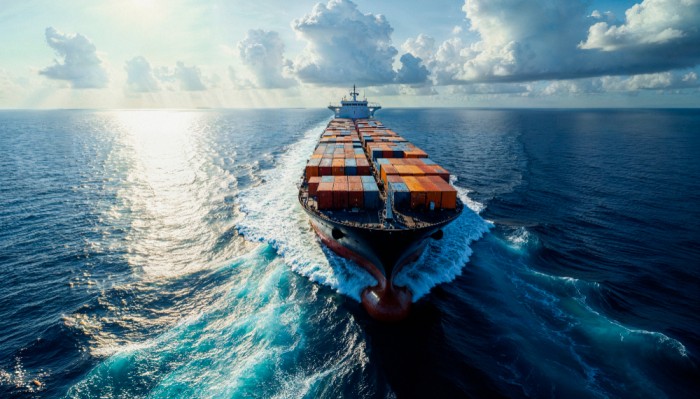
The Houthi Movement, backed by Iran, has issued a stark warning, declaring that all Israeli shipping activities in the Red Sea are now under a “total ban” and will be treated as legitimate military targets. This announcement follows their claim of responsibility for a recent missile attack on Israel, escalating fears of potential disruptions along one of the globe’s most crucial maritime routes.
In their statement, the Houthis emphasized that any vessel associated with Israel navigating through the Red Sea could come under attack, heightening tensions in the Middle East. This development coincides with an increase in hostilities between Israel and Iran, marked by reports of renewed fire exchanges. The Houthis assert that their missile strike against Israeli targets successfully met its objectives, as Israel’s military confirmed the detection of a missile launch from Yemen, prompting activation of their air defense systems.
The Red Sea serves as a vital shipping corridor, linking Europe and Asia via the Suez Canal. Previous Houthi assaults on commercial vessels during the Israel-Hamas conflict compelled numerous shipping companies to reroute their journeys around southern Africa, leading to significantly higher transportation expenses and prolonged delivery schedules.
This latest threat emerges amid ongoing worries over the security of the Strait of Hormuz, another essential passage for global energy exports. Any sustained disruption in these waterways could have profound ramifications for international trade and the oil market, exacerbating an already volatile geopolitical landscape.
Part of the “Axis of Resistance,” a coalition of Iran-aligned groups that includes Hezbollah, the Houthis have maintained control over significant portions of Yemen, including the capital Sanaa, since 2014. Analysts caution that renewed maritime attacks could heighten risks for commercial vessels in the region, adding further uncertainty to the already complex political situation.